English Bulldog Puppy Feeding Guide
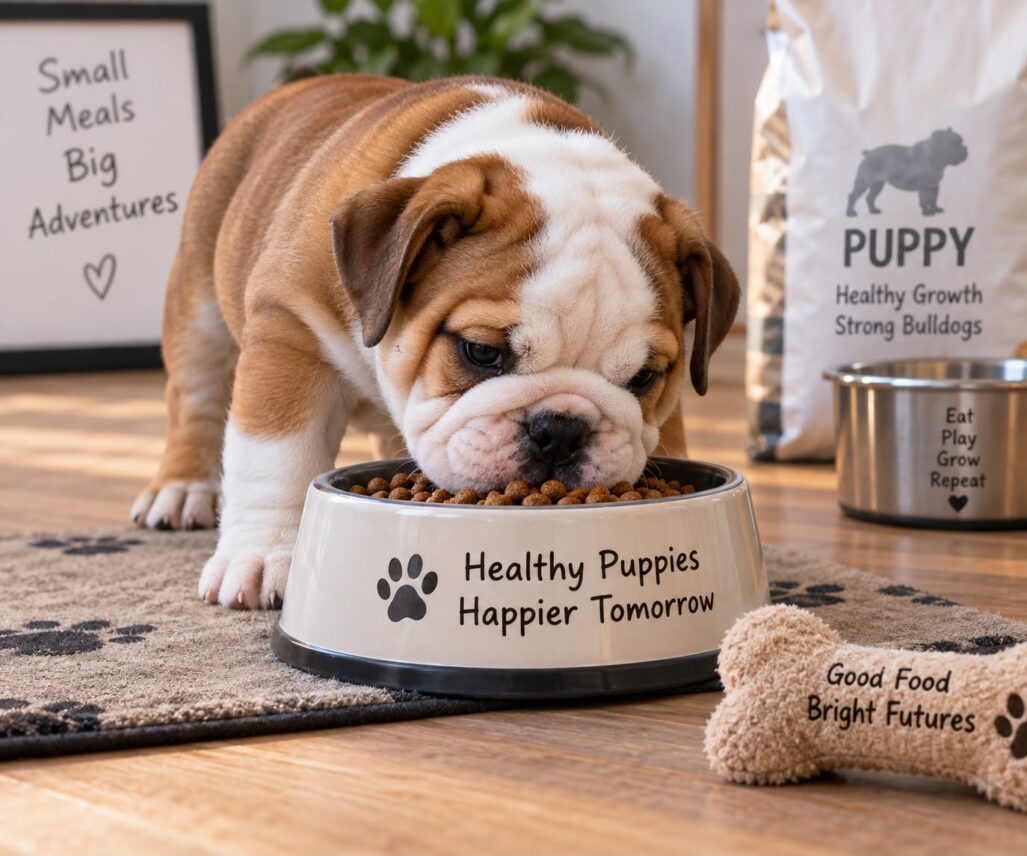
Feeding an English Bulldog puppy the right way is an important part of supporting healthy growth, digestion, energy, and development. English Bulldog puppies can have sensitive stomachs, so choosing a suitable diet and maintaining a consistent feeding routine can make a big difference.
At Heritage English Bulldogs, we encourage new owners to keep feeding simple, consistent, and appropriate for the puppy’s age and development.
What Should an English Bulldog Puppy Eat?
An English Bulldog puppy should eat a high-quality puppy food designed for growth and development. Look for food that provides a balanced combination of protein, fats, carbohydrates, vitamins, and minerals.
A puppy-specific formula is usually more appropriate than adult dog food because growing puppies have different nutritional needs.
Whenever you change your puppy’s food, make the transition gradually over several days to reduce the chance of an upset stomach.
How Often Should You Feed an English Bulldog Puppy?
Young English Bulldog puppies usually do better with several smaller meals throughout the day instead of one large meal.
A consistent schedule can also make toilet training easier because you can better predict when your puppy may need to go outside.
Try to feed your puppy at roughly the same times each day and avoid leaving large amounts of food available all day.
How Much Food Does an English Bulldog Puppy Need?
The correct amount depends on the puppy’s age, body size, activity level, and the type of food being used.
Always check the feeding instructions provided by the food manufacturer and adjust when necessary based on your puppy’s condition and veterinary advice.
Avoid overfeeding. English Bulldogs can gain excess weight easily, and maintaining a healthy body condition is important for their overall wellbeing.
Keep Fresh Water Available
Your English Bulldog puppy should always have access to clean, fresh drinking water.
Check the water bowl regularly throughout the day, especially after playtime, meals, and warm weather.
Some human foods can be harmful to dogs and should never be given to your puppy.
These include chocolate, grapes, raisins, onions, garlic, alcohol, foods containing xylitol, and cooked bones.
It is safest to keep your puppy on a balanced dog-food diet and use puppy-safe treats in moderation.
Avoid Sudden Diet Changes
Changing food too quickly can sometimes cause digestive problems.
If you need to introduce a new food, gradually mix increasing amounts of the new food with the old food over several days.
If your puppy develops persistent vomiting, diarrhea, loss of appetite, or other concerning symptoms, contact a veterinarian.
Use Treats Carefully
Treats can be very useful during English Bulldog training, but they should not replace balanced meals.
Choose small puppy-safe treats and keep portions controlled. Using very small pieces during training can help prevent unnecessary extra calories.
You can also read our English Bulldog training guide for more advice on building good habits from an early age.
Establish a Healthy Feeding Routine
A simple routine can help your puppy adjust to their new home.
Feed at consistent times, provide fresh water, monitor your puppy’s weight and body condition, and avoid giving too many table scraps.
Your veterinarian can also help you decide whether your puppy’s diet and feeding amount are appropriate as they grow.
Bringing Home an English Bulldog Puppy
Before bringing home a puppy, it helps to prepare food, bowls, bedding, toys, and a comfortable sleeping area in advance.
You can browse our English Bulldog puppies for sale to learn more about our available puppies and adoption process.
Our puppies are raised with regular handling, early socialization, and appropriate care before joining their new families.
Frequently Asked Questions
Can English Bulldog puppies eat adult dog food?
Puppies generally benefit from food formulated specifically for growth. Adult dog food may not provide the same balance of nutrients required during puppy development.
Should I change my puppy’s food immediately after bringing them home?
It is usually better to continue with the food the puppy is already familiar with at first. If you want to change brands or formulas, make the transition gradually.
How do I know if I am feeding too much?
Monitor your puppy’s body condition and weight rather than relying only on the amount in the bowl. If you are unsure, ask your veterinarian for guidance.
Can I give my English Bulldog puppy human food?
Some human foods are safe in small amounts, while others can be dangerous. The safest option is to use a balanced puppy diet and dog-safe treats.
Final Thoughts
A consistent feeding routine, balanced puppy food, clean water, controlled treats, and regular monitoring can help support your English Bulldog puppy as they grow.
Every puppy is different, so feeding needs may change over time. Regular veterinary check ups can help ensure your puppy is developing appropriately