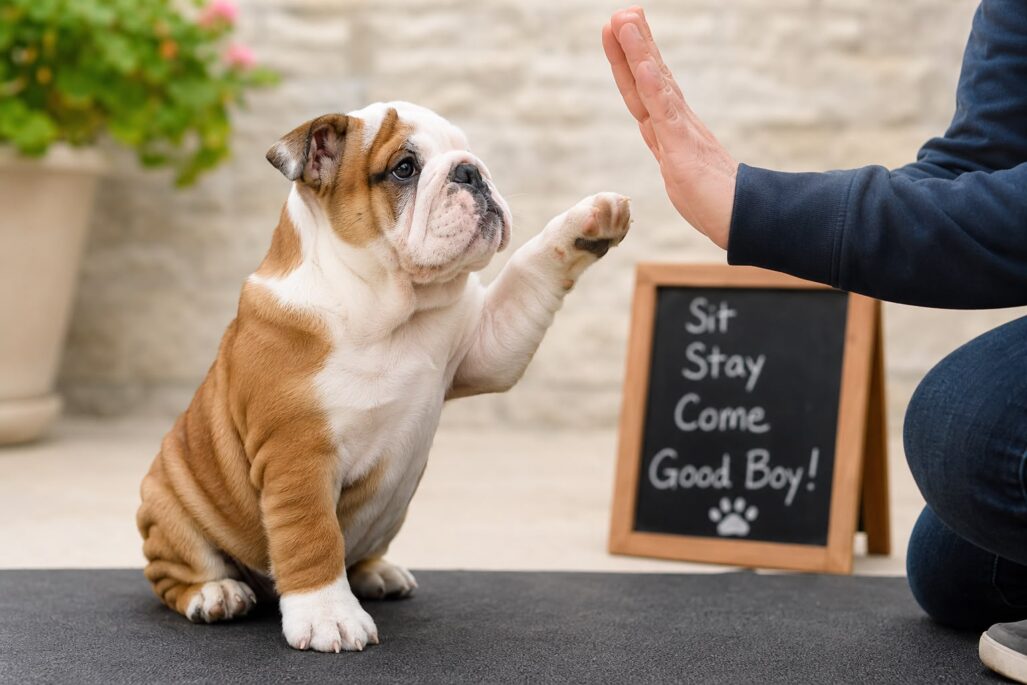
Training helps your English Bulldog understand what is expected at home and when interacting with other people and animals.
A well-trained Bulldog is easier to manage and can become a more confident family companion.
Early training can help with:
* Potty habits
* Basic commands
* Walking on a leash
* Socialization
* Crate training
* Household manners
* Reducing unwanted behaviors
* Building trust between you and your puppy
The key is to start slowly and remain consistent.
Understanding Your English Bulldog’s Personality
English Bulldogs are known for being affectionate, loyal, and people-oriented.
They can also be determined and sometimes stubborn. This does not mean they cannot be trained. It simply means that training usually works best when it is interesting, rewarding, and consistent.
Avoid long training sessions. Many Bulldogs respond better to several short sessions throughout the day.
Praise, treats, toys, and affection can all be useful rewards.
When to Start Training an English Bulldog Puppy
Training can begin as soon as your puppy arrives home.
Start with simple lessons such as:
* Learning their name
* Going outside for potty breaks
* Becoming comfortable in a crate
* Coming when called
* Sitting for attention
* Getting used to a collar and leash
Young puppies have short attention spans, so training sessions of around five to ten minutes can be enough.
As your puppy gets older and more experienced, you can gradually introduce more advanced commands.
English Bulldog Puppy Training Schedule
Having a regular training schedule can help your puppy understand what happens throughout the day.
A simple daily routine may look like this:
Morning
Take your puppy outside for a potty break immediately after waking up.
After your puppy finishes, offer praise and a small reward.
Feed breakfast and allow another potty break shortly afterward.
Spend a few minutes practicing simple commands such as sit, come, or name recognition.
Midday
Take another potty break.
Practice leash walking or simple obedience for a few minutes.
Give your puppy supervised playtime and opportunities to explore safely.
Afternoon
Use another short training session to practice commands your puppy has already learned.
Introduce only one new skill at a time.
Keep the session positive and stop before your puppy becomes tired or distracted.
Evening
Take your puppy outside after dinner.
Practice calm behavior and simple commands.
Give your puppy another potty break before bedtime.
Following a similar routine each day can make training easier.
Potty Training an English Bulldog
Potty training requires consistency.
Take your puppy outside:
* First thing in the morning
* After eating
* After drinking a lot of water
* After waking from a nap
* After playing
* Before bedtime
Choose a regular potty area when possible.
When your puppy uses the correct area, praise them immediately.
Avoid punishing accidents. Instead, clean the area thoroughly and continue following the routine.
Young puppies cannot hold their bladder for long periods, so frequent potty breaks are important.
Crate Training an English Bulldog Puppy
A crate can give your puppy a safe and comfortable place to rest.
Introduce the crate gradually.
Place comfortable bedding inside and allow your puppy to explore it without pressure.
You can encourage your puppy to enter by placing treats or toys inside.
Keep early crate sessions short.
Never use the crate as punishment.
The goal is for your puppy to associate the crate with rest, comfort, and safety.
Basic English Bulldog Obedience Training
Basic obedience makes everyday life easier and safer.
Start with simple commands.
Sit
Hold a small treat near your puppy’s nose.
Move the treat slowly upward and slightly backward.
As your puppy naturally lowers into a sitting position, say “sit.”
Reward them immediately.
Come
Begin in a quiet area.
Say your puppy’s name followed by “come.”
When your puppy reaches you, praise them and provide a reward.
Never punish your puppy after calling them to you.
You want coming when called to remain a positive experience.
Stay
Ask your puppy to sit.
Hold your hand out and say “stay.”
Take one small step backward.
If your puppy remains in place, return and reward them.
Gradually increase the distance and duration.
Down
Hold a treat near your puppy’s nose and slowly move it toward the floor.
When your puppy lowers their body, say “down” and reward them.
Leave It
Place an item or treat nearby and say “leave it.”
When your puppy stops trying to reach it and looks toward you, reward them with a different treat.
This command can be particularly useful for safety.
Using Positive Reinforcement
Positive reinforcement means rewarding your Bulldog when they perform the behavior you want.
Rewards can include:
* Small treats
* Verbal praise
* Petting
* Toys
* Playtime
Give the reward immediately after the correct behavior so your puppy understands what earned it.
Avoid shouting or harsh punishment. It can create fear and make training more difficult.
Calm repetition and consistent rewards are usually more effective.
Socializing Your English Bulldog Puppy
Socialization helps puppies become comfortable with different people, environments, sounds, and experiences.
Gradually introduce your puppy to:
* Adults
* Children
* Safe, healthy dogs
* Household sounds
* Car rides
* Different surfaces
* Grooming and handling
* New environments
Keep experiences positive and controlled.
Your veterinarian can advise you about safe socialization while your puppy is completing their vaccination schedule.
Leash Training an English Bulldog
Begin leash training indoors or in a quiet area.
Allow your puppy to become comfortable wearing a collar or harness first.
Attach the leash and encourage your puppy to walk beside you.
Reward them when they walk without pulling.
If your puppy pulls strongly, stop moving and wait for the leash to loosen before continuing.
Keep walks short, particularly for young puppies.
English Bulldogs can be sensitive to heat, so avoid strenuous walks during hot weather.
Dealing With Stubborn English Bulldog Behavior
Bulldogs sometimes appear stubborn when they are tired, distracted, confused, or simply not motivated by the reward being offered.
If your puppy stops responding:
* Make the training session shorter
* Use a more valuable reward
* Practice in a quieter environment
* Return to an easier command
* Take a break
* Try again later
Training should remain enjoyable.
Repeating the same command many times while your puppy is ignoring you can make the command less effective.
Training Mistakes to Avoid
Some common training mistakes can slow your puppy’s progress.
Try to avoid:
* Changing rules from day to day
* Using different commands for the same behavior
* Training for too long
* Punishing accidents
* Expecting immediate perfection
* Allowing unwanted behavior because the puppy is small
* Giving rewards too late
* Training when your puppy is extremely tired or excited
Everyone in the household should follow similar rules.
Consistency helps your English Bulldog understand what is expected.
Weekly English Bulldog Training Routine
A simple weekly routine can help you track progress.
Week 1
Focus on:
* Name recognition
* Potty routine
* Crate introduction
* Sit
* Gentle handling
Week 2
Continue previous skills and introduce:
* Come
* Basic leash walking
* Stay for a few seconds
Week 3
Continue practicing and introduce:
* Down
* Leave it
* Longer stays
* More socialization
Week 4 and Beyond
Continue practicing all previous commands.
Gradually add distractions and practice in different safe environments.
The goal is steady progress rather than perfect performance immediately.
How Long Does English Bulldog Training Take?
Every puppy learns at a different pace.
Some commands may be learned within a few days, while reliable obedience can take weeks or months of consistent practice.
Potty training can also vary considerably between puppies.
Training should continue throughout your Bulldog’s life.
Even adult dogs benefit from regularly practicing familiar commands.
English Bulldog Training and Exercise
Training sessions can provide mental stimulation, but Bulldogs also need appropriate physical activity.
Short walks and gentle play sessions are often suitable.
Avoid excessive exercise, especially in hot or humid weather.
Because English Bulldogs can have difficulty tolerating heat, always watch for signs of overheating and provide access to water and a cool resting area.
Continue Learning About English Bulldogs
Training is only one part of raising a happy and well-adjusted English Bulldog.
Good nutrition, regular veterinary care, socialization, appropriate exercise, and a consistent daily routine are equally important.
You can explore our Bulldog Tips & Guide for more information about caring for English Bulldogs.
If you are currently searching for a puppy, visit our Available Puppies page to see our current English Bulldog puppies.
You can also review our Health Guarantee or Contact Us if you have questions about our puppies, care practices, or the reservation process.